
Feature: The Blue Van
The Blue Van im Interview zum Album „Recording Club of 96“
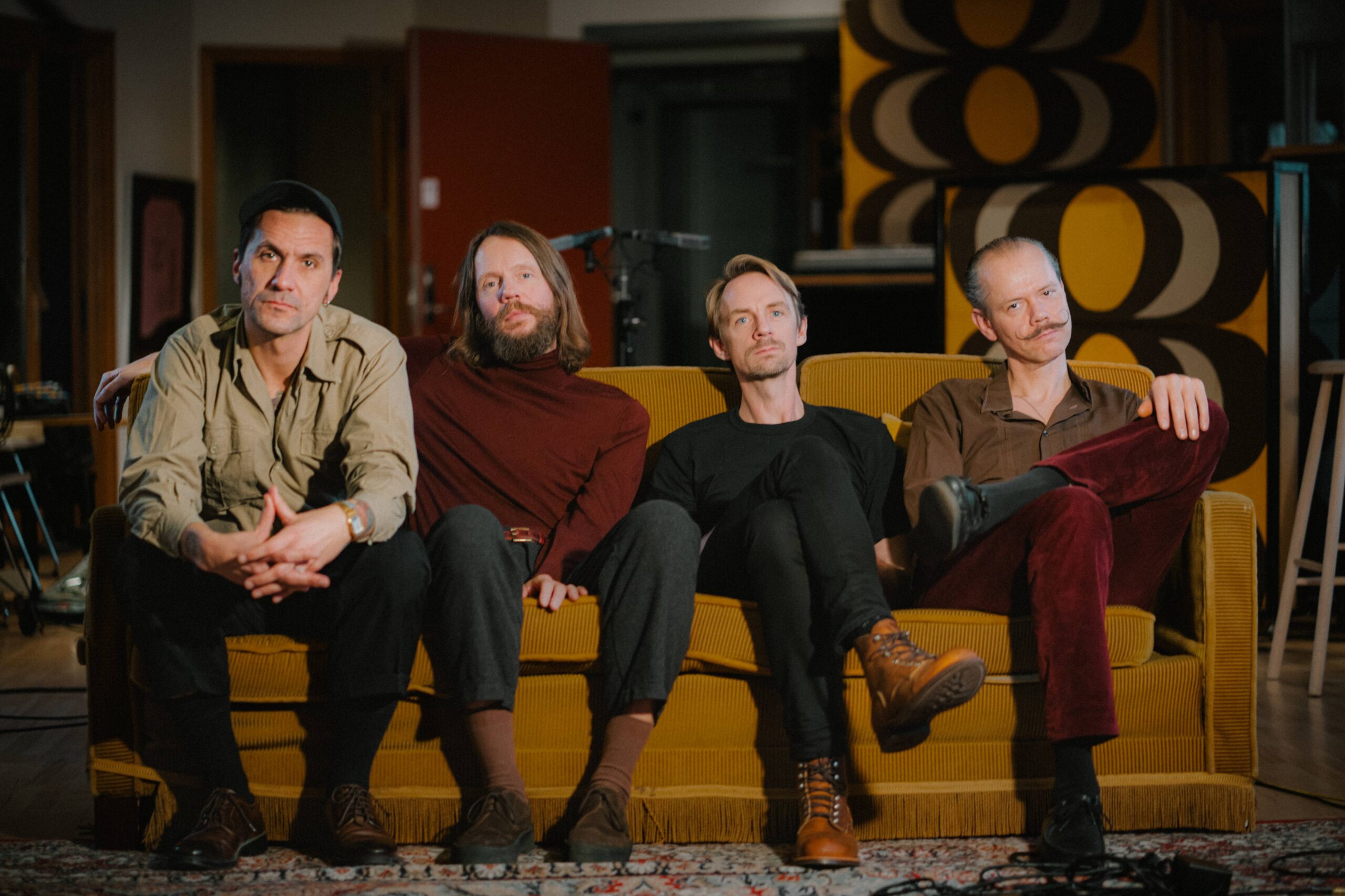
The Blue Van im Interview zum Album; Fotocredit: Nordic Music Society
The Blue Van – Freundschaft als Fundament, Gegenwart als Auftrag
Drei Jahrzehnte Bandgeschichte sind oft ein Einladungsschreiben an die Nostalgie. Für The Blue Van hingegen sind sie vor allem ein Ausgangspunkt. Mit Recording Club of 96, das am 30.01. erschien, legt die dänische Rockband ihr achtes Album vor – eines, das tief in ihrer gemeinsamen Vergangenheit verwurzelt ist, sich aber entschieden dem Jetzt zuwendet. Nicht als Rückblick, sondern als Spiegel einer Welt, die aus den Fugen geraten ist und dennoch nach Verbindung sucht.
Schon im Gespräch wird deutlich, dass dieses Album kein selbstreferenzielles Denkmal werden sollte. „Es gab so viel über die Welt zu sagen, dass wir kein Album über uns machen wollten“, erklären The Blue Van. Der Blick richtet sich nach außen – dorthin, wo Reibung entsteht, wo Menschen einander verlieren und wiederfinden, wo Musik noch immer als verbindende Kraft wirken kann. Dieser Anspruch zieht sich wie ein roter Faden durch Recording Club of 96: Songs über Liebe und Freiheit, über toxische Männlichkeit, Identität, Verlust und Nähe wirken nie belehrend, sondern getragen von einem tiefen humanistischen Grundton. „Speaking up for the little guy“, nennen sie es selbst.
Dass diese Offenheit glaubwürdig bleibt, hat viel mit der außergewöhnlichen Geschichte der Band zu tun. Seit 1996 sind Steffen Westmark, Søren Christensen, Allan Villadsen und Per Jørgensen nicht nur Bandkollegen, sondern Lebensbegleiter. Diese lange Freundschaft prägt die emotionale Ehrlichkeit des Albums spürbar. Konflikte und unterschiedliche Geschmäcker gehören dazu, doch am Ende steht ein gemeinsames Ziel. „Wir sind forever brothers und gegenseitig unsere Psychologen“, sagen sie mit einem Lächeln – und meinen es ernst. Die Sicherheit dieser Beziehung erlaubt es ihnen, heute tiefer zu graben als je zuvor, ohne Angst vor Brüchen.
Ein weiterer, fast symbolischer Resonanzraum für das Album war das legendäre Farvemøllen-Studio in Kopenhagen. Dort, wo seit den 1960er-Jahren dänische Musikgeschichte geschrieben wurde und das Anfang 2026 schließen wird, nahmen The Blue Van Recording Club of 96 mit ihrem langjährigen Freund und Produzenten Mads Mølgaard Helbæk auf. Die Atmosphäre dieses Ortes, das Wissen, Teil eines letzten Kapitels zu sein, verlieh den Sessions eine besondere Intensität. Westmark beschreibt es als beinahe „heilig“ – ein Gefühl von Respekt, Zusammenfassung und emotionaler Verdichtung. Die Vorstellung, dass ihre Songs noch lange in den Wänden dieses Raumes nachhallen, selbst wenn er eines Tages ein Büro sein sollte, passt zu einem Album, das Spuren hinterlassen will.
Im Zentrum all dessen steht für The Blue Van heute ein anderer „Kern“ als noch 1996. Damals ging es darum, laut zu sein, erfolgreich zu werden, die Welt zu erobern. Heute ist es die Freundschaft selbst. Aus ihr schöpfen sie die Kraft, ehrlich zu bleiben und sich nicht an Relevanzmaßstäben abzuarbeiten. „Wenn wir uns selbst zufriedenstellen, überträgt sich diese Energie“, sagt Westmark. Ob das dann 15 oder 200.000 Menschen erreicht, liegt nicht mehr in ihren Händen – und genau darin liegt eine neue Freiheit.
Trotz acht Alben und zahlloser Touren ist keine Müdigkeit zu spüren. Im Gegenteil: Der Proberaum ist für The Blue Van noch immer ein sakraler Ort, eine Mischung aus Beichtstuhl und Spielplatz. Neue Ideen, Gespräche über das Leben, ein Glas Wein – daraus entsteht Musik, die sich lebendig anfühlt. Und auch der Blick nach vorne bleibt offen: Vielleicht wieder mehr Konzerte im Ausland, vielleicht bald schon ein weiteres Album. Westmark träumt sogar von einer rohen, direkten Live-Platte, aufgenommen vor Publikum, mit allen Ecken und Kanten. Oder etwas völlig anderem.
Recording Club of 96 zeigt eine Band, die sich nicht auf ihrem Status ausruht, sondern weiter sucht. Nach Wahrheit, nach Klang, nach Verbindung. Warm und vertraut im Ton, aber wach und fordernd im Inhalt, ist dieses Album weniger ein Schlussstrich als ein Ausrufezeichen. The Blue Van beweisen, dass langjährige Freundschaft kein Hemmschuh für Gegenwärtigkeit ist – sondern ihr vielleicht stärkstes Fundament.
Hier kannst du das ganze Interview lesen:
Recording Club of 96 feels deeply rooted in your shared history, yet very much connected to the present. How did you approach making an album that reflects “the time we live in”
without slipping into nostalgia?
The Blue Van: „I think there was so much to say about the world we live in right now, that we didn’t want it to be an album about us. Don’t think we’ve ever been too nostalgic, well maybe a couple of times, but for the most part we try to gaze towards the outer world. Also because our mission has always been trying to connect with people and connect people with other people. We just tried to make the best album from the huge pile of demos we have. Which is always the approach.“
You’ve been friends and bandmates for almost three decades now. In what ways has that long friendship shaped the songwriting and emotional honesty on this record?
The Blue Van: „It has shaped it in that way, that we are very aligned in the goal. We still do have big discussions and different taste, but it always ends up sounding like us and we always end up as satisfied as you can be as artists – which is roughly about 80 percent;) Haha. But the long friendship is sweeter and deeper than ever. It does something to people growing up together that close. And being adults now, it’s like nothing can “hurt us” anymore, because we’ve tried most things and we know what the mission is now. Staying life companions and in the process try to bring some happiness into our own lives as well as into the lives of the people listening to the music. We’re forever brothers and each other’s psychologists.“
The album touches on themes like love and freedom, toxic masculinity, loss, and identity. Did these topics emerge naturally during the writing process, or did you consciously decide to engage more directly with social and personal issues?
The Blue Van: „I think that you’re always trying to get as close to being personal without revealing all. And I’m constantly looking for subjects or topics that resonate with my own and the band’s values about what it means to be a proper, loving and righteous human being. Speaking up for the little guy, you could say.“
Recording the album at the historic Farvemøllen studio adds another layer of meaning, especially knowing it will soon close. How did the atmosphere and history of that space
influence the sound or mindset of the sessions?
The Blue Van: „It made it feel special knowing that this was gonna be one of the last records made there. I like the image of our songs bouncing around the room, even when it gets turned into an office workspace or whatever it’s gonna be now. The fact that we did it with long-time friend and producer at Farvemøllen, Mads Helbæk, contributed to the feeling of it being a special record. Felt like we somehow could entangle our emotions for each other and the friendship into the album just by the shared understanding we musically have for each other. And it felt like you summed up what had been going on for the last many decades, felt holy in some sense and respectful.“
Steffen, you’ve said that each album is an attempt to get closer to the core of what drives you as artists. What does that “core” feel like today compared to when you first started out
in 1996?
The Blue Van: „Feels like friendship. That is the core of the band. When we can still rely on each other you’ll always have the confidence and power to dig deeper, do better and be more honest. In 1996 and in our early career, we just wanted to rock as hard as we could and wanted to set out to be successful. Which we became, at least in our own minds. We’ve experienced so much together, travelled the world and that doesn’t go away even though you’ll have years where you might not feel relevant to the world. Even Bowie had years where people thought what he did was irrelevant. The core today is you do your goddamn best to satisfy yourself and if you succeed that energy will transcend to a group of people. Might be 15 people, might be 200.000. That’s out of our hands.“
After eight albums and countless tours, what still excites you about making music together—and where do you feel The Blue Van are heading after Recording Club of 96?
The Blue Van: „It might sound like I’m repeating myself, but being in a rehearsal space with the rest of the band still excites me and the band. Because of our deep friendship. It’s somewhat like a church, you go to play the gospel and confess. It never gets old to play around with new ideas, while you catch up on each other’s lives and have a couple of glasses of wine. That energy flows into the music as well, in my opinion. Music is magic. We’ll never be done, which might be the tragedy of life. Realizing that there’ll always be more music to make and more music you won’t be able to make, because everyone has an expiration date. Hmm, where will we go now? Good question. I think we all have a vision of stuff and directions. Hopefully when our kids are a little older we might do gigs abroad again. Who knows. I do think though, that we’ll be doing an album fairly soon again. At least that’s what I would like to do. Maybe a live hard punching-no-bullshit-MC5-ish album with all new songs performed and recorded directly to an audience with flaws and all. Then again maybe something completely different. There are still so many places to go musically.“
Sie sehen gerade einen Platzhalterinhalt von YouTube. Um auf den eigentlichen Inhalt zuzugreifen, klicken Sie auf die Schaltfläche unten. Bitte beachten Sie, dass dabei Daten an Drittanbieter weitergegeben werden.
 Vorheriger Beitrag
 Nächster Beitrag