
Feature: Billie Bird „La lumière sans fins des étés“
Feature Billie Bird „La lumière sans fins des étés“
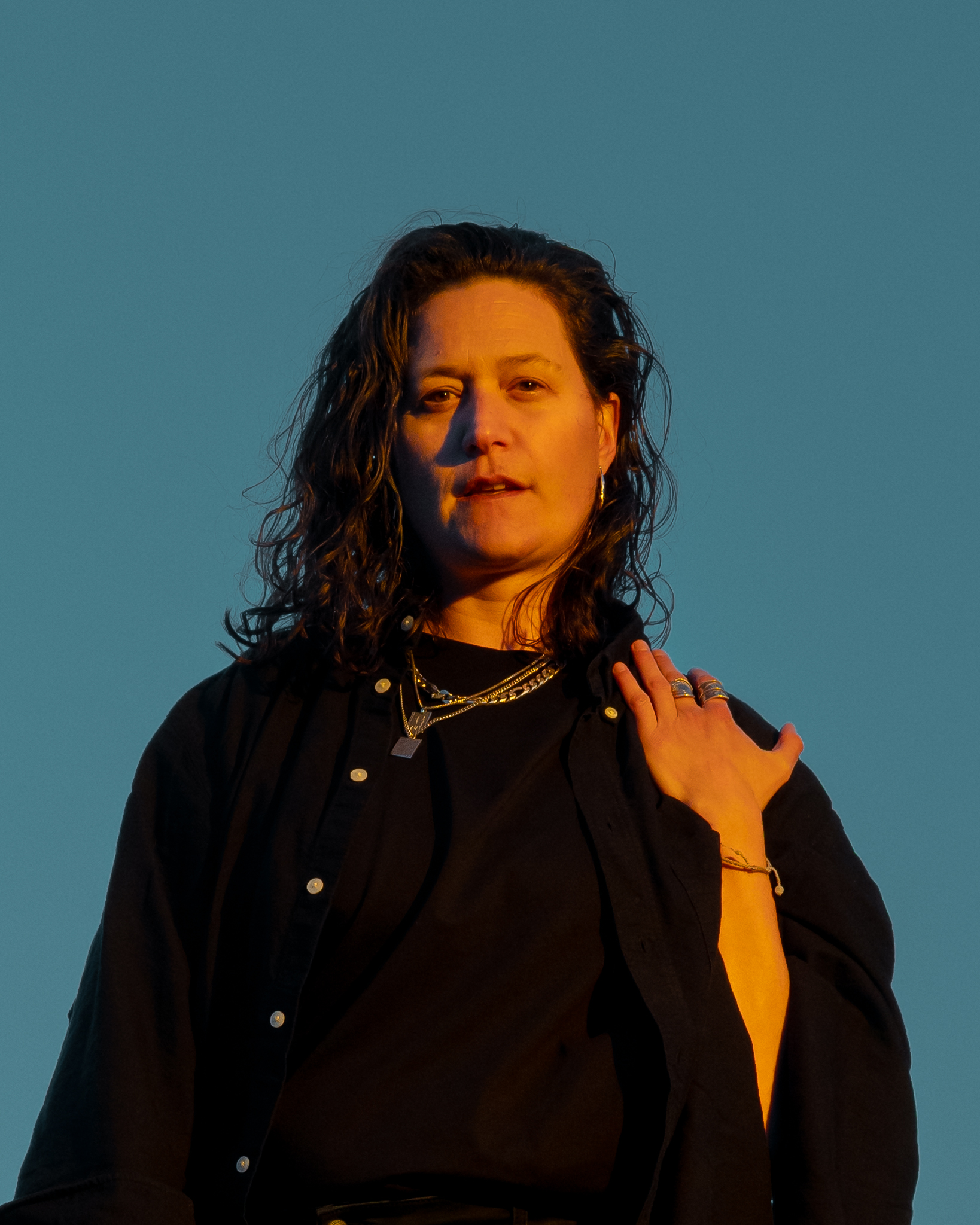
Feature Billie Bird im Interview zum neuen Album; Fotocredit: Julie Folly
Auf ihrem zweiten Album „La Lumière sans fin des étés“ sucht Billie Bird nicht mehr die großen emotionalen Ausschläge, sondern das, was bleibt, wenn das Drama langsam nachlässt. Die Schweizer Musikerin verbindet Indie-Folk und Pop zu einem warmen, organischen Klangbild, in dem ihre Simme und die akustische Gitarre viel Raum erhalten. Die Produktion ist dabei ganz bewusst reduziert gehalten und so wirkt sie nahbar und lebendig. Acht Songs kreisen dabei um das Thema Liebe, Verlust, Herkunft und die Menschen, die einem Halt geben. Billie Bird stellt dabei die klassischen Erzählungen von Herzschmerz und Leidenschaft infrage. So spielt der Humor wie in „Soledad“ eine gewichtige Rolle. Auch Freundschaft, Familie und queere Gemeinschaft versteht die Songwriterin nicht als getrennte Bereiche, sondern als unterschiedliche Formen derselben Verbundenheit.
Passend dazu schildert sie im Interview genau diesen Wandel treffend als eine neue Vorstellung von Intensität. Das Drama steht nicht mehr länger im Fokus, sondern die Präsenz und das Bleiben. So drängt sie sich selten auf, sondern lässt den Texten und Zwischentönen mehr Platz.
“La lumière sans fin des étés” feels like a very personal album, but also like an album aboutconnection – to lovers, friends, family and your wider community. When did you realize during the writing process that these different forms of connection would become the central thread of the record?
Billie Bird: „I think every album is personal, because it’s always tied to people and stories, to questions, to knots that need untangling… There are just more or less intimate ways of doing it. I honestly don’t know how to work any other way than from a place of intimacy and honesty, and I’m that same person in real life! I work by making collections: of experiences, words, readings, emotions, observations, little bits of music recorded here and there. Then I go through the material and ask myself: what resonates with how I see things right now? What do I value, what do I want to stand up for? I feel it in my body first. There’s this button that lights up, an intuition, a little voice saying “keep going with this” (lol). The theme of connection came later, when we were deciding on the visual direction. I knew I wanted an embrace, and the more I followed my instincts, the clearer it became. Connection has always been at the heart of my life, but I think this is the first album where I’ve managed to turn it into a complete, coherent vision.“
Love seems to be one of the album’s biggest themes, but you approach it in a rather different way than the usual pop narrative of intensity, heartbreak and drama. What doeslove mean to you today, and how has your understanding of it influenced the way you wrote these songs?
Billie Bird: „Wow, that’s a wonderful and difficult question. As a lesbian and queer person, I think of the world in nonbinary terms. It’s not love or friendship or family—it’s love and friendship and family. I reject the “or” imposed by heteronormative society; I prefer “and.” I come from a broken family background, with a lot of abandonment and breakups. It took me a long time to redefine how I relate to others. Ten years ago, I never would have imagined that some of my exes would become my best friends. Today, I want “slow love,” just as we talk about slow food: taking the time to get to know someone, to build trust. Tragedy drained me; it took more from me than it gave. What I’m looking for is presence. Being there. Staying. “Not much, but always,” as one of the songs says. Naturally, this has changed my writing. What interests me is what remains: small gestures, duration, memory. “2661 Nights” counts time rather than sorrows. And when I talk about pain, as in “Love Hurts,” I prefer to do so with irony.“
You wrote and composed the album completely analog in your studio in Lausanne before producing it with Domi Chansorn in Zurich. What did working in such an intimate and stripped-back way allow you to discover about your songs – and was there anything you deliberately wanted to keep imperfect or raw?
Billie Bird: „Working in analog meant getting back to the basics. Limiting the possibilities meant freeing myself from the infinite array of digital options, where you can correct everything, layer everything, and smooth everything out. There, all that remained was the sound, the movement, the body. A very sensory, very physical experience. It forced me to trust the song just as it is. To believe that it’s enough. And, deep down, to believe that I’m enough, too: my voice, my story, the way I play guitar : who I am. When Domi and I produced the album in Zurich, we wanted to preserve that humanity. And he was fantastic in the process of stripping it down, and secure me that everything was there, the songs were super « enough » (and great). A concrete example: when recording some guitar for « dans ton royaume » the volume knob was cracking a lot, we didn’t recorded another guitar line but just the cracklings ! Love this. These imperfections aren’t mistakes. They’re traces of life !!!!“
There is a lot of pain, exile and difficult memories behind the album, but the music itself often feels warm, gentle and even playful. Where do you usually find comfort when life becomes difficult, and how do you translate that feeling of comfort into music?
Billie Bird: „When life gets hard, I practise gratitude. When I feel lonely, I think back to my therapist’s words: “create connection”. And I keep lists of things that do me good: going into the forest, drinking a huge coffee while rolling cigarettes, holding the people I love tight. Stepping out of drama isn’t easy, it’s a practice. I try to welcome discomfort and anxiety as messages: what’s hard? Why? Then I use that material to write. I create new narratives in which I’ve absorbed, digested, and found peace. That doesn’t mean erasing pain: difficult emotions deserve to be remembered too, so that violence never becomes normal. But life goes by, memories stay, and I want to shine a light on what’s beautiful and lasting. I want my songs, my concerts, and myself to be comforting spaces. And in music, I can’t think of anything more comforting than guitar arpeggios in open tunings, a warm voice, and a beautiful, organic-sounding drum kit.“
Your previous album “Incendies” explored emotional extremes, while “La lumière sans fin des étés” seems to move more towards connection, tenderness and resilience. Do you feel that the process of making this album changed you personally, or did the music simply give a voice to changes that were already happening?
Billie Bird: „A bit of both, I think. I wrote and recorded part of “Incendies” between 2020 and 2023, right after my mother died, during covid and the end of an eight-year relationship. It was a kind of apocalyptic time, as if nothing was holding together anymore. I also turned 40. Those cycles are intense, like the spin cycle of a washing machine! It was a huge reset. “Incendies” and the intensive tour that followed gave me so much experience. I could see what truly moved me, and what moved the people who listen to me the most. All of that made me realise what really matters to me, both in my life and in my art. An artist’s life is filled with so much intensity that I’ve thought about that notion a lot: what kind of intensity do I want to value? Today, it’s no longer the intensity of drama and extremes. It’s more the intensity of presence, of connection, of what lasts. My artistic practice evolves with me, and “La lumière sans fin des étés” is that change put into music.“
You’ve already played hundreds of shows across Europe and built an audience beyond Switzerland, but this album also feels like a very clear statement of who you are as an artist. After “La lumière sans fin des étés” , where do you see yourself musically – does this record feel like a new beginning, a confirmation of where you belong, or perhaps an opening towards something you haven’t explored yet?
Billie Bird: „First of all, thank you for all these questions. I can tell you’ve really listened to the album, and that means a lot to me. For example, when you talk about a “very clear statement”: it really is one!I think that statement comes from a vision I carried within me, which became clearer and deeper throughout the whole process: from the early collecting, to the recording, all the way to creating the visual universe. It’s a statement about the music I want to make, how I want to make it, and what I want to say. I feel it’s an accomplished record, because it gives access to my musical craft (the nuances of the voice, the phrasing, the variety of melodies and structures, a lot of work on the choruses), to my core values (honesty, generosity, community), and to my writing (imagery, different angles, but with real coherence across the whole album). So to answer your question: it’s a bit of everything! I don’t know what the future holds. I might want to go straight into a new album, or I might give myself a break to write or compose for others. There’s also “The Sailor and the Scientist”, a project with Odd Beholder that’s very close to my heart. With both our careers, we haven’t yet found the time to really move it forward, but it’s there, waiting for its moment. Right now, everything feels very open. And now that I’ve reached this level of accomplishment, maybe it’s the perfect time to explore something new. I know myself: I’m insatiably curious. I always want to discover new territory, while continuing to refine my craft and develop its many facets, both inner and outer.“
Live
03.11. – Stuttgart – Café Galao
04.11. – Frankfurt am Main – Ponyhof
06.11. – Köln – Tsunami Club
07.11. – München – Milla
08.11. – Dortmund – Domicil
11.11. – Hamburg – Nochtwache
12.11. – Leipzig – Moritzbastei
13.11. – Berlin – Kulturhaus Insel Berlin
Sie sehen gerade einen Platzhalterinhalt von YouTube. Um auf den eigentlichen Inhalt zuzugreifen, klicken Sie auf die Schaltfläche unten. Bitte beachten Sie, dass dabei Daten an Drittanbieter weitergegeben werden.
 Vorheriger Beitrag
